



Jumper's Knee (Patellar Tendinopathy)
A Physio's Guide to Treating Jumper's Knee (Patellar Tendinopathy)
That ache just below your kneecap that warms up while you play but bites the next morning? If you're into basketball, netball, volleyball, AFL or running, there's a good chance it's jumper's knee, known clinically as patellar tendinopathy.
It's one of the most common knee complaints our physios see at our Redfern clinic, and one of the most misunderstood. Rest doesn't fix it, generic stretches don't do much, and the popular advice to "just do isometrics" only tells a fraction of the story. This guide sets out what's happening in the tendon and the approach that reliably gets people back to their sport.
What is jumper's knee?
Your patellar tendon links your kneecap (patella) to your shin bone (Tibia) and handles high loads every time you jump, land, sprint or change direction. Jumper's knee occurs when those loads repeatedly outpace what the tendon can recover from. Over time, the tendon's structure changes, and it starts to hurt.
It's common and it's stubborn. In explosive jumping sports like basketball and volleyball, as many as 45% of elite athletes are affected, but it's not just a problem for the pros. Recreational players and weekend warriors often develop it too.
The tell-tale signs:
- pain right at the bottom of the kneecap, in a spot you can usually point to,
- pain that warms up during activity but returns (often worse) afterwards or the next morning, and
- symptoms that flare whenever you ramp up training.
Why won't it go away on its own?
Resting feels like the obvious answer, but it tends to backfire. Take all the load off a tendon, and it loses capacity, so the pain returns the moment you start playing again. Jumper's knee also isn't really an inflammation problem, which is why anti-inflammatories don't resolve the underlying issue. The tendon needs the right kind of loading to rebuild, applied carefully.
One more thing worth knowing: scans can look "abnormal" in people who have no pain at all. In some elite jumping sports, more than a third of players show changes on a scan without any symptoms. That's why imaging alone doesn't diagnose the condition or tell you when you've recovered. We read it alongside the full clinical picture, never on its own.
Do isometrics fix jumper's knee?
Isometric exercises (static holds, like a sustained quad contraction) do have a genuine role. A strong hold of around 45 seconds, repeated a few times, can ease tendon pain for several hours, which is useful before training or a game. But they manage pain; they don't rebuild the tendon. Treating jumper's knee as "just do your isometrics" is exactly why so many people stay stuck.
What works: progressive loading
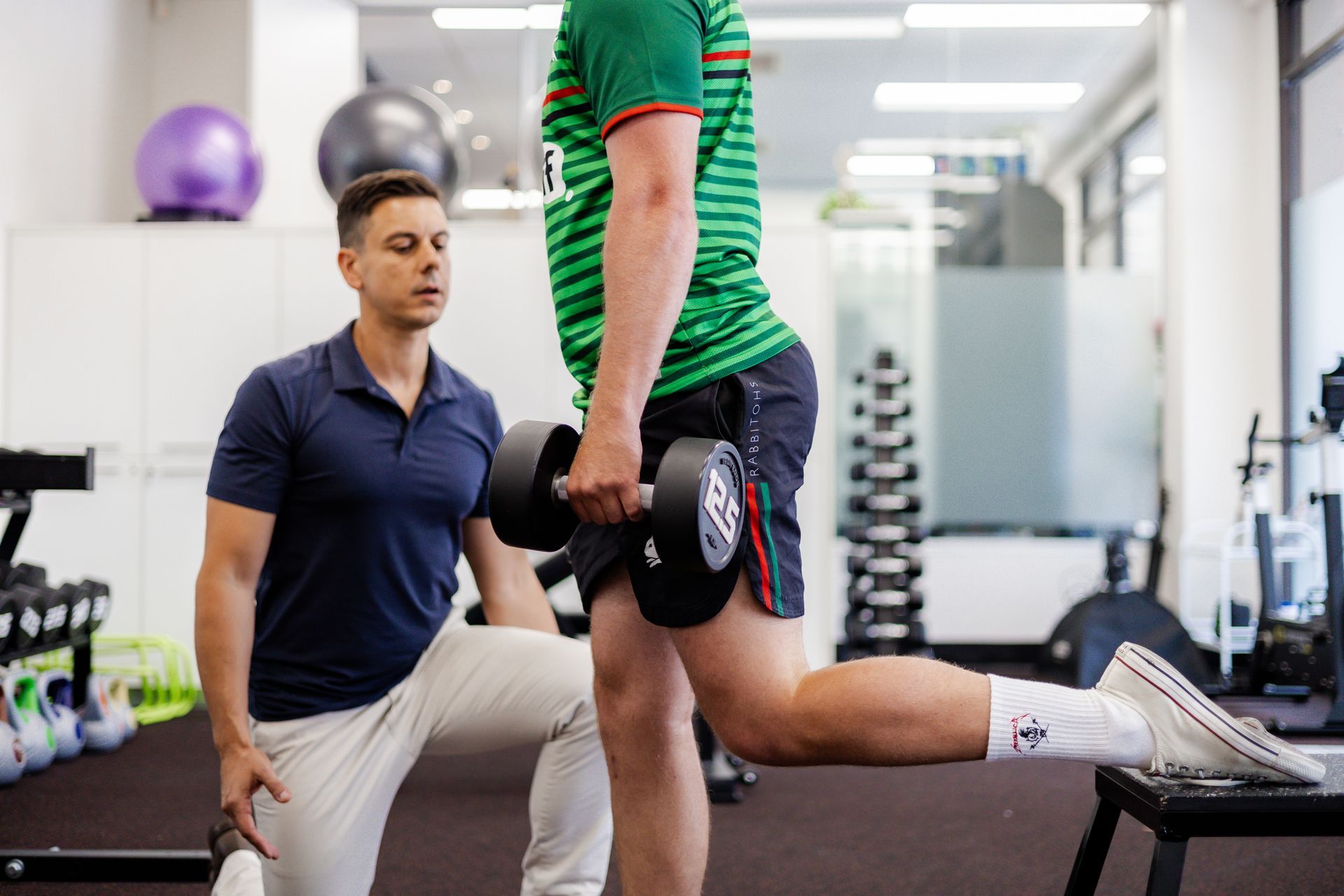
The treatment that works is progressive loading: a staged program that gradually rebuilds the tendon's capacity, then its power, then its readiness for sport. Each stage is advanced based on the tendon's response, and a single-leg squat on a small decline is an excellent daily gauge. If your pain on that test stays stable or improves, the tendon is coping with the load.
Recovery stages:
- Settle the pain. Isometric holds and sensible load management, reducing high-load drills rather than stopping completely.
- Build strength. Heavy, slow resistance work (such as leg press and leg extension) to rebuild the tendon's capacity.
- Restore power and spring. Energy-storage and plyometric work (jumping, landing and change-of-direction drills), introduced gradually.
- Return to sport. Sport-specific drills and a graded return to full training.
The exercises are only part of it. Doing it well also depends on:
- Load management: adjusting training volume and frequency so the tendon adapts instead of being overloaded.
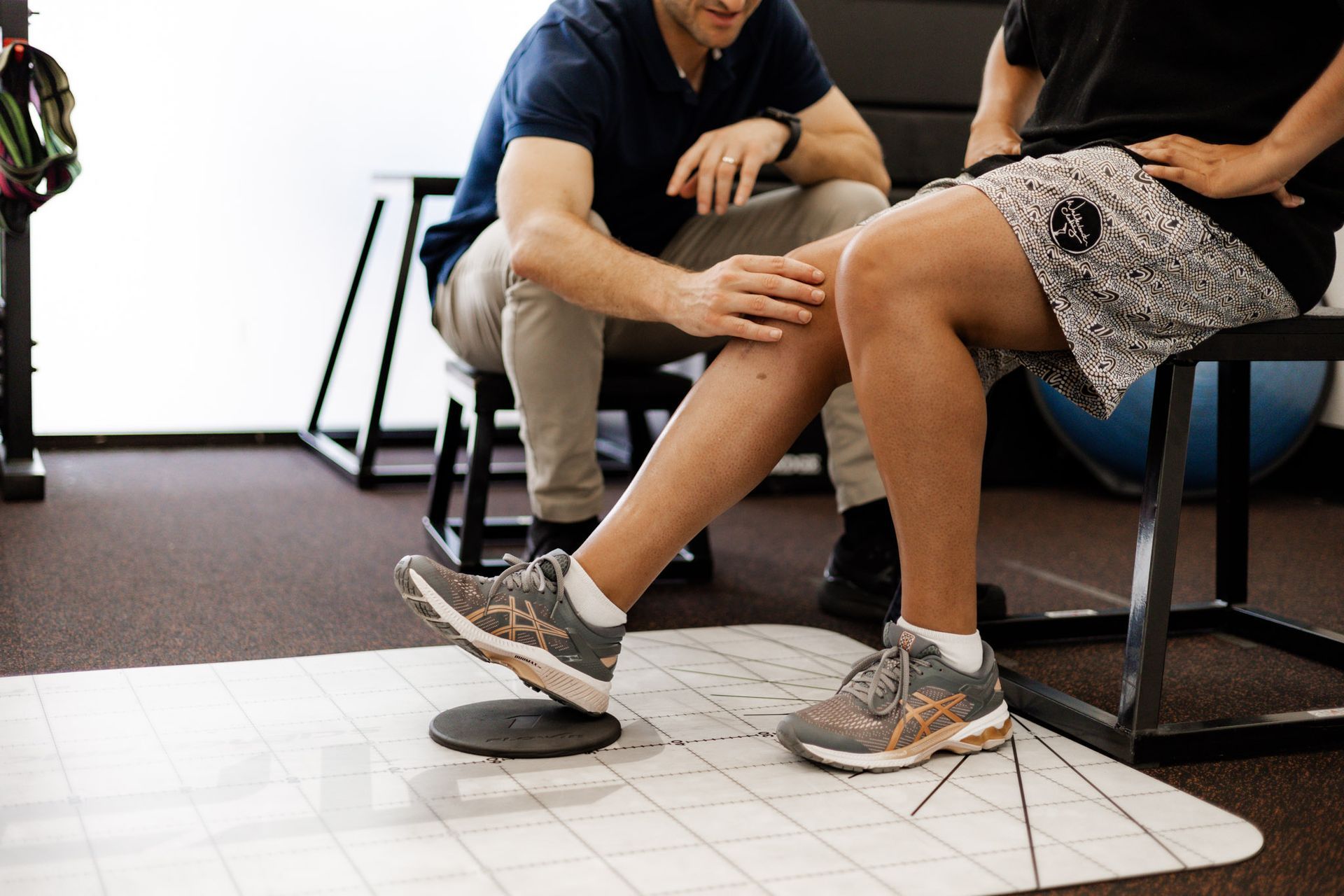
- Fixing the cause: the tendon rarely fails in isolation. Stiffness or weakness through the ankle, calf, hip and the rest of the leg changes how load travels through the knee, so we assess and build those up too. Our athletic screening is designed to find exactly these gaps.
- Tracking your progress with real data: we measure strength and function, so progression is based on evidence, not guesswork. It's the same approach we use across all our exercise prescription.
- Education: learning to read your symptoms and adjust your loading is what keeps the condition manageable for the long term.
How long does jumper's knee take to heal?
Tendons are slow to remodel, so patience matters. Milder cases can settle in a matter of weeks, while a knee with significant strength and movement deficits can take six to twelve months to rebuild fully. Tendons also have a delayed response to load: they often feel fine during activity, then flare around 24 hours later, which is why daily self-monitoring with the decline squat is so useful. The condition rewards consistency, and rushing it tends to set recovery back. Many people keep it under control in the long term by maintaining their strength by working out a couple of times a week during their playing years.
When should you see a physio for knee pain?
It's worth getting assessed if your knee pain:
- sits right at the bottom of your kneecap, in a spot you can point to,
- warms up during activity but is worse the next day,
- shows up on stairs, squatting or long periods of sitting, or
- keeps returning every time you train harder.
The earlier a tendon is loaded the right way, the less it tends to dictate your season.
Jumper's knee treatment in Redfern
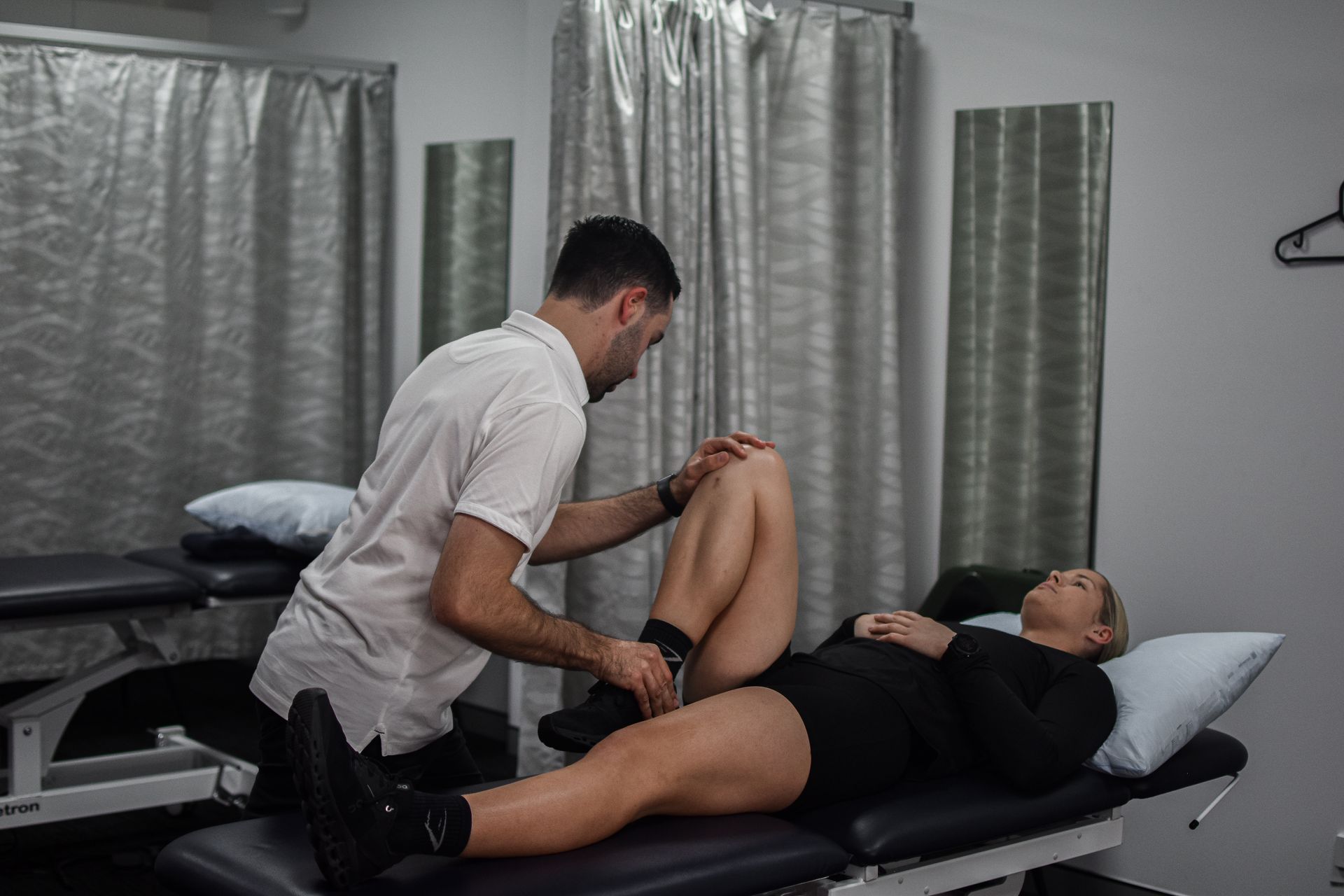
Our physios have managed tendon injuries in elite athletes, and we bring that same staged, individualised approach to everyone who walks in, whether you're chasing a return to the court or simply want to train without your knee complaining. Because jumper's knee responds best to loading that's properly guided and tailored, it's exactly the kind of injury where good physiotherapy makes the difference.
If jumper's knee is getting in the way, book an assessment and we'll build you a plan that addresses the cause, not just the symptoms.
Frequently asked questions
-
Is jumper's knee the same as patellar tendinopathy?List Item 1
Yes. "Jumper's knee" is the everyday name; patellar tendinopathy is the clinical term for the same condition.
-
Should I rest my jumper's knee?List Item 2
Not completely. Total rest weakens the tendon and the pain returns when you load it again. The goal is managing load, not avoiding it.
-
Can I keep playing sport with jumper's knee?List Item 3
Often yes, with the right load management, but it needs to be guided. Pushing through significant pain without a plan tends to make it worse.
-
Do I need a scan?List Item 4
Usually not. Jumper's knee is mainly diagnosed from your history and a hands-on assessment. Scans can confirm changes, but plenty of pain-free people have "abnormal" looking tendons, so imaging is read alongside the full picture, not in isolation.
-
Will jumper's knee come back?
It can, which is why ongoing strength maintenance matters. Keeping up a couple of strength sessions a week is one of the best ways to keep it settled.
References: Breda SJ et al. Effectiveness of progressive tendon-loading exercise therapy in patellar tendinopathy (JUMPER study). British Journal of Sports Medicine, 2021;55:501–509. • Deng J. Advancing the management of patellar tendinopathy. British Journal of Sports Medicine, 2026;60(12):919–920. • Malliaras P, Cook J, Purdam C, Rio E. Patellar Tendinopathy: Clinical Diagnosis, Load Management and Advice. JOSPT, 2015;45:887–898. • Lian OB et al. Prevalence of jumper's knee among elite athletes. Am J Sports Med, 2005;33:561–567.
This article is general information and isn't a substitute for individual assessment.